Tumors of the Peripheral Nervous System:
The vast majority of peripheral nerve sheath tumors (such as schwannomas and neurofibromas) are benign (nevertheless, definitive determination of biological dignity can only be established through final neuropathological examination). The primary clinical manifestations are neurological deficits, including sensory disturbances (paresthesias, hypoesthesia up to complete anesthesia) and motor weakness (ranging to complete paralysis) in the affected extremity. Neuropathic pain syndromes frequently accompany these deficits.
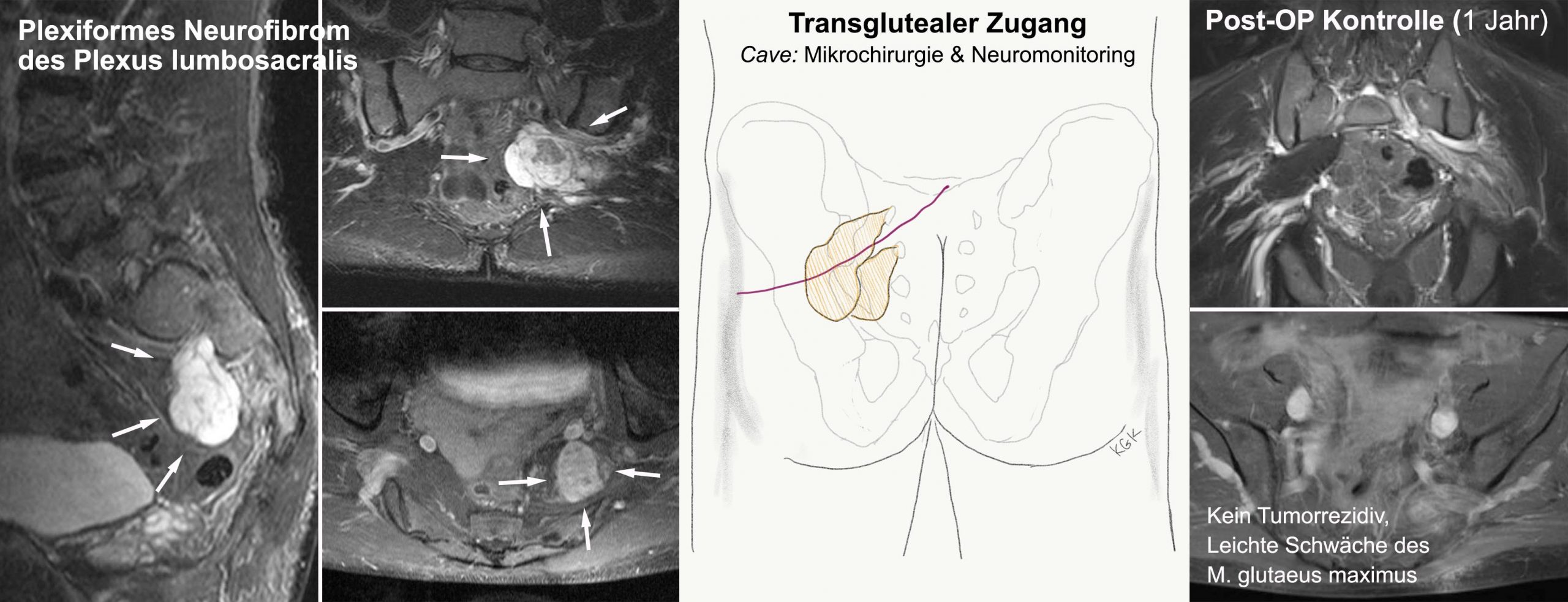
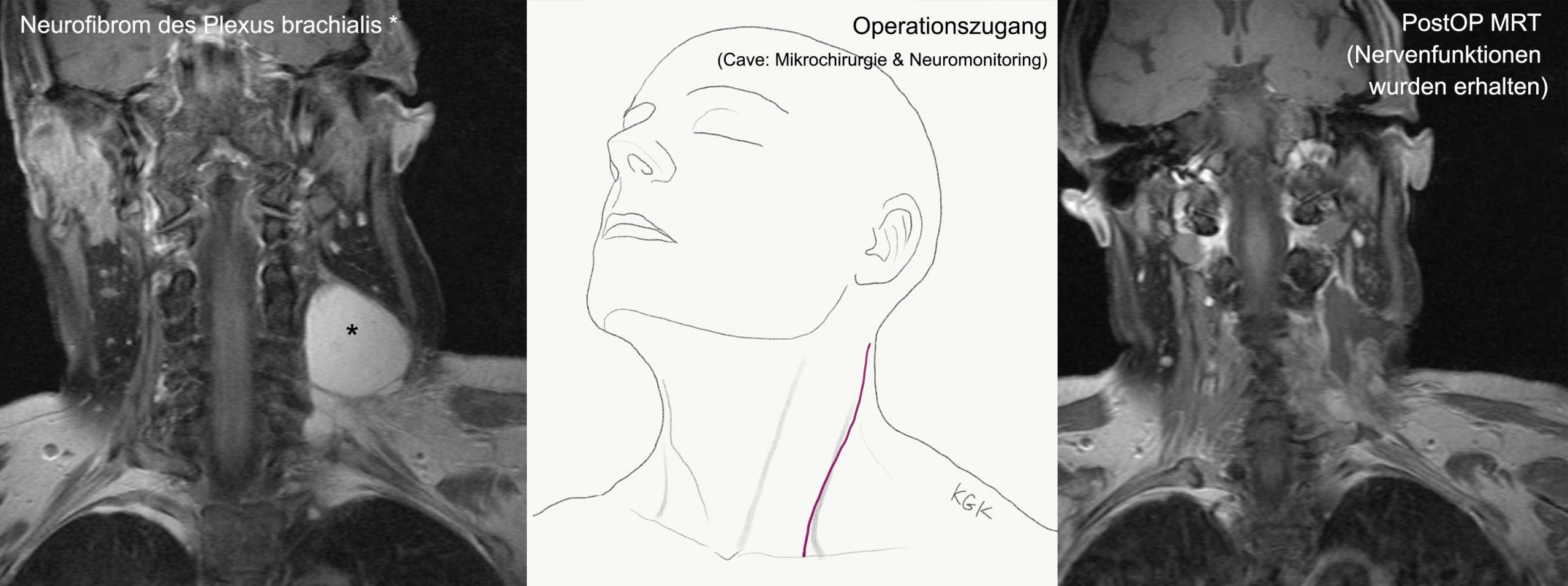
High-resolution diagnostic imaging—including MR neurography (see images below) and high-frequency neurosonography—alongside neurophysiological testing via electroneurography and electromyography complete the diagnostic evaluation.
Surgical tumor resection is generally indicated and is discussed in detail with each patient based on symptoms, localization, and anatomical relationship to the nerve. For the patient's quality of life, preserving the neurological function of the affected nerve during tumor removal is paramount. To achieve this, state-of-the-art intraoperative electrophysiological nerve monitoring (IONM) is routinely employed to identify, isolate, and safeguard functioning motor and sensory fascicles.
Peripheral nerve tumors are sometimes erroneously "biopsied" during minor outpatient procedures. This approach should be strictly avoided, as unmonitored surgical manipulation or partial resection frequently leads to irreversible functional nerve loss and severe neuromatous pain.
Two illustrative clinical examples of complex peripheral nerve tumors and their surgical resection:
A dedicated microsurgical technique, intraoperative neurosonography, and continuous electrophysiological monitoring are essential prerequisites for successful, function-preserving resection of peripheral nerve tumors.